Back-to-School Readiness Is More Than Filling Vacancies
How Districts Can Prepare Staff, Strengthen Systems, and Create a More Stable Start to the School Year
The beginning of a new school year arrives quickly.
One moment, district teams are reviewing summer priorities. The next, they are finalizing student placements, filling vacancies, onboarding new employees, preparing classrooms, reviewing support plans, and trying to ensure every team is ready for the first day of school.
Under that kind of pressure, back-to-school preparation can easily become a race to complete schedules and cover open positions.
Staffing matters. But a filled schedule does not always mean a team is prepared.
A strong start also requires clear expectations, practical training, consistent communication, accessible student-support plans, and systems that staff can realistically implement once students arrive.
That is why BECS developed the Back-to-School Readiness Toolkit: A Practical Guide for Educators. The free resource includes readiness checklists, paraeducator support strategies, proactive behavior and de-escalation reminders, inclusive-practice guidance, professional-development planning tools, and team reflection worksheets.

What District Teams Are Preparing For
School teams are entering the new year while continuing to navigate several interconnected challenges.
Many districts are managing paraeducator shortages, staff turnover, limited onboarding time, increasing student-support needs, and growing pressure on experienced staff members. At the same time, teams are expected to provide consistent accommodations, behavior support, communication systems, inclusive opportunities, and safe learning environments.
These responsibilities cannot rest with only a few highly experienced people.
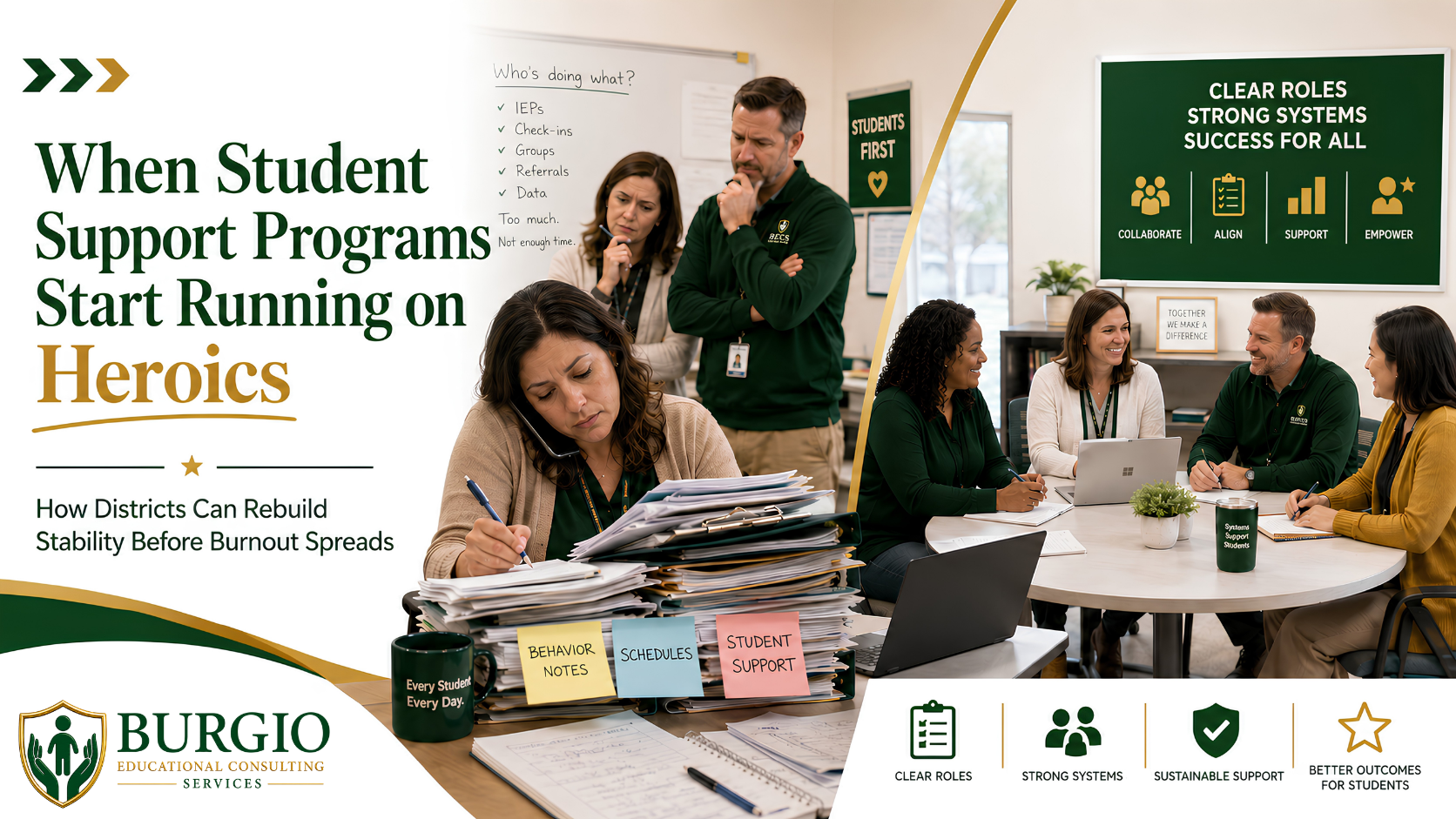
When a program depends on one teacher, paraeducator, behavior specialist, or administrator to hold everything together, the system may appear functional—but it remains vulnerable.
Back-to-school preparation offers districts an important opportunity to examine more than whether positions have been filled.
District leaders should also be asking:
- Do staff understand their roles and responsibilities?
- Have teams reviewed the students and support plans they will be implementing?
- Are communication procedures clear?
- Do new employees know where to go when they need help?
- Are paraeducators receiving practical guidance before being assigned to students?
- Are behavior and de-escalation practices consistent across staff members?
- Have teams identified programs that may need additional stabilization before school begins?
These conversations can help districts identify concerns early, while there is still time to respond proactively
1. Prepare the Team, Not Just the Schedule
A staffing plan tells a district who is assigned to each position.
A readiness plan helps those employees understand what successful support should look like.
Before the first day of school, staff should have clarity regarding classroom routines, communication procedures, student-support responsibilities, confidentiality, safety expectations, and when to seek assistance.
This is especially important for paraeducators and newly hired staff members who may enter classrooms with very different levels of experience.
Without clear onboarding and orientation, employees may rely on observation, assumptions, or conflicting directions from different team members. That can lead to inconsistent support, staff frustration, and confusion for students.
Even a brief but intentional onboarding process can make a meaningful difference.
Staff should leave knowing:
- What their role includes
- What their role does not include
- How support plans will be communicated
- Who provides instructional or behavioral direction
- How staff should document and communicate concerns
Where they can access additional help Clarity builds confidence—and confident staff are better positioned to provide consistent support.
2. Review Student Supports Before Students Arrive
Student-support planning should not begin after the first difficult day.
Teams need time to review relevant IEP information, accommodations, communication needs, behavior-support plans, health and safety considerations, sensory needs, reinforcement systems, and transition supports.
The goal is not for every staff member to memorize every document. The goal is to ensure that the people supporting a student understand the information necessary to provide safe, appropriate, and consistent support. District teams should also confirm that plans are accessible to the appropriate employees and that staff know who to contact when questions arise.
When information is incomplete, unavailable, or communicated inconsistently, staff are more likely to respond reactively. Proactive review helps teams begin with shared expectations instead of trying to create them during a crisis.
3. Establish Consistent Behavior and Regulation Supports
Behavior support is most effective when it begins before escalation.
Predictable routines, visual supports, transition warnings, movement opportunities, appropriate choices, positive reinforcement, and access to regulation supports can reduce uncertainty and help students participate more successfully throughout the day.
Consistency across adults is equally important.
When one staff member provides space, another increases verbal demands, and another attempts to negotiate during escalation, the student receives mixed signals. The team may then interpret the student’s response as unpredictable when the support itself is inconsistent.
Back-to-school training should give staff practical opportunities to discuss:
- Early signs of dysregulation
- Proactive classroom supports
- Calm and concise communication
- Processing time
- Avoiding unnecessary power struggles
- Co-regulation
- Safety procedures
- How and when to request additional support
Training should connect directly to the environments and situations staff are likely to encounter—not remain theoretical.
4. Strengthen Collaboration Across Roles
Meaningful inclusion depends on more than placing a student in a general education environment.
It requires shared responsibility, consistent accommodations, practical collaboration, and systems that allow general education staff, special education staff, paraeducators, related-service providers, and administrators to work together.
Before the school year begins, teams should clarify:
- Who is responsible for planning and communicating accommodations
- How paraeducators will receive direction
- When teams will have opportunities to collaborate
- How concerns will be communicated
- How student independence will be supported
- How strategies will remain consistent across environments
Students are more likely to experience meaningful participation and belonging when the adults supporting them are aligned.
5. Plan Professional Development Around Real Needs
Back-to-school professional development is valuable time. It should help staff prepare for the work they will actually perform.
Effective training is practical, collaborative, immediately usable, and aligned with district priorities. It should also include a plan for follow-through after the initial presentation.
Districts may benefit from focusing professional development on areas such as:
- Paraeducator roles and responsibilities
- Proactive behavior support and de-escalation
- Regulation and sensory support
- Inclusive practices and accommodations
- Executive-functioning strategies
- Classroom routines and visual supports
- Communication and team problem-solving
- New employee onboarding
- Program-specific implementation needs
A single training session can introduce useful strategies. Sustainable implementation, however, often requires coaching, leadership alignment, practice, feedback, and ongoing opportunities to problem-solve.
The most important question is not simply, “What training should we provide?”
It is, “What support will help staff use this consistently throughout the school year?”
Start the Year With Stronger Systems
No district can anticipate every staffing change, student need, or challenge that may arise during the year.
Readiness is not about achieving perfection before the first bell rings.
It is about creating enough clarity, consistency, and support that teams know how to respond when challenges occur.
Small improvements in onboarding, communication, planning, role clarity, and professional development can significantly strengthen staff confidence and student support.
The BECS Back-to-School Readiness Toolkit was created to help district leaders, administrators, special education teams, paraeducators, and school staff begin those conversations. It provides practical checklists, reflection questions, planning worksheets, and strategies that teams can use during summer preparation, staff meetings, and professional-development planning.
Download the Free Back-to-School Readiness Toolkit
Use the toolkit with individual programs, building leadership teams, special education departments, or district-wide planning groups to identify strengths, uncover gaps, and establish priorities for the upcoming school year.
Prepared teams. Consistent support. Stronger staff. Better student outcomes.
BECS also partners with districts through customized professional development, paraeducator training, consultation, program stabilization, workforce planning, and specialized staffing support.
A stronger school year starts before the first bell rings.