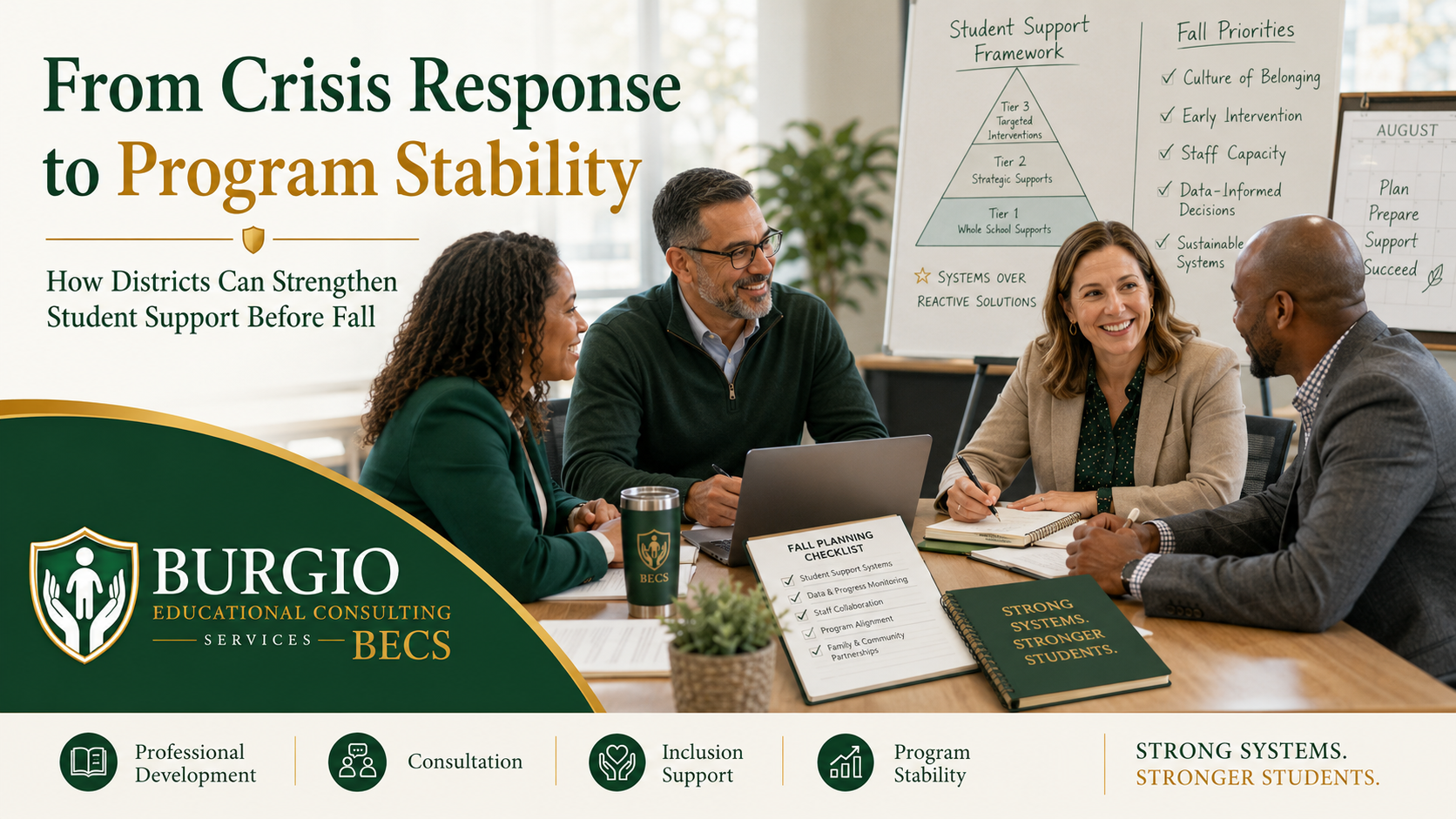
From Crisis Response to Program Stability: How Districts Can Strengthen Student Support Before Fall
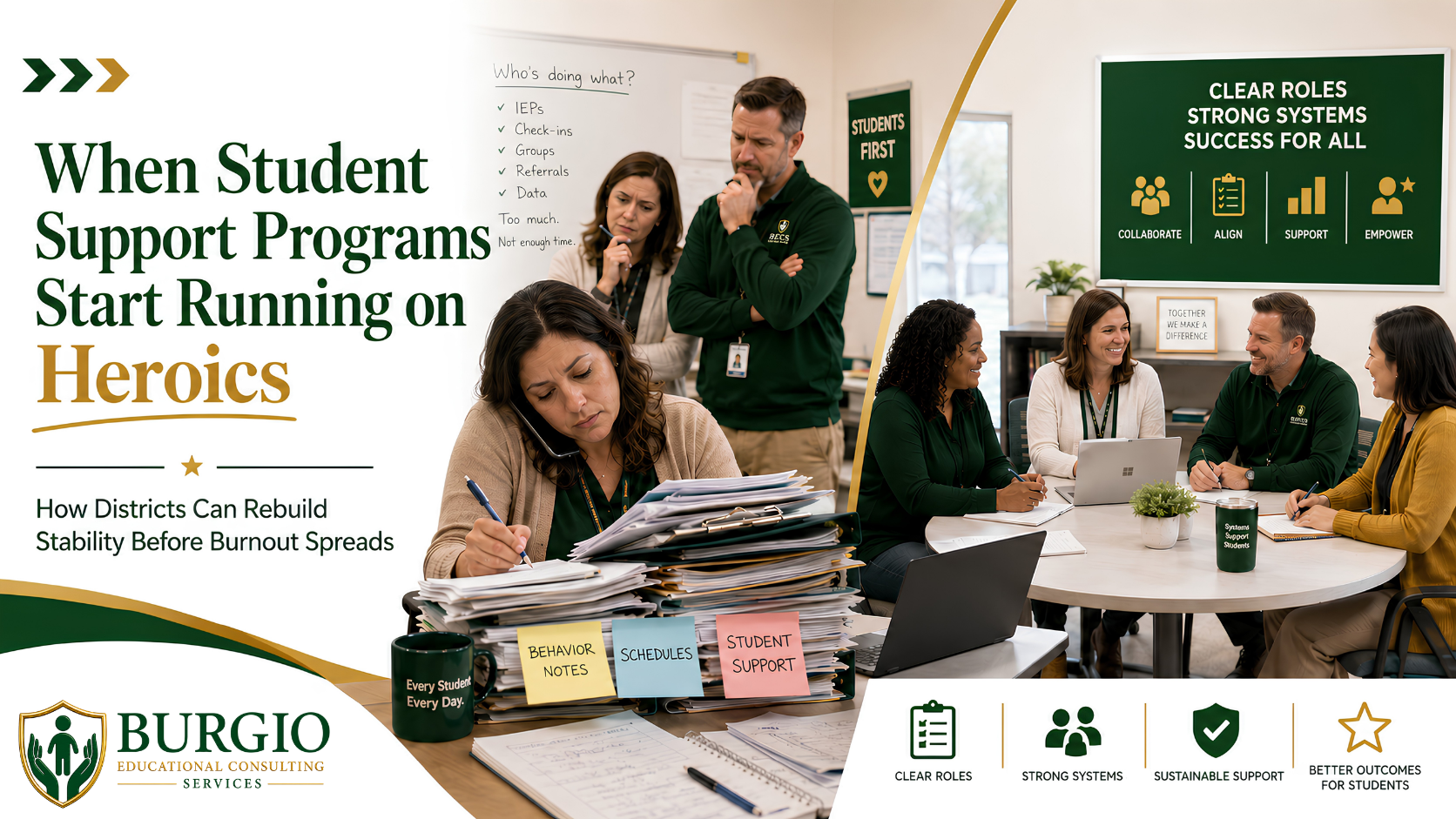
Every district leader knows the feeling: the school year begins, student needs increase, teams are stretched, behavior concerns rise, and suddenly everyone is solving urgent problems in real time.
A student needs additional support.
A classroom team feels overwhelmed.
A paraeducator is unsure how to implement a plan.
A teacher needs help supporting inclusion.
A building leader is trying to stabilize a program while also managing staffing, family communication, safety concerns, and compliance expectations.
By October, many districts are already operating in crisis response.
But it does not have to start that way.
The weeks before fall are a valuable opportunity to step back, review support systems, and strengthen the programs that serve students with complex learning, behavioral, sensory, developmental, and social-emotional needs.
Program stability does not come from one solution. It comes from aligned support across several areas: professional development, consultation, inclusion support, workforce optimization, program stabilization, and, when needed, staffing support.
1. Start with Professional Development that Prepares Staff for Real Student Needs
Many school teams begin the year with good intentions but limited preparation for the range of student needs they will encounter. Staff may be supporting students with autism, anxiety, depression, sensory needs, mood disorders, Down syndrome, cerebral palsy, communication differences, behavioral challenges, or other developmental disabilities.
Professional development can help staff feel more prepared and less reactive.
Effective training may include:
- Positive behavior supports
- De-escalation strategies
- Trauma-informed practices
- Supporting students with sensory needs
- Inclusive classroom strategies
- Understanding behavior as communication
- Data collection and documentation
- Role clarity for paraeducators and support staff
- Building independence instead of dependence
The goal is not to overwhelm staff with theory. The goal is to give teams practical tools they can use immediately.
When staff feel prepared, students experience more consistency.
2. Use Consultation Before Challenges Become Crises
Sometimes a team does not need a full program redesign. They need an outside perspective, targeted coaching, and a clear plan.
Consultation can help districts identify what is working, what is breaking down, and what support is needed next. This is especially valuable when teams are seeing repeated behavioral incidents, unclear implementation of student plans, staff burnout, family concerns, or difficulty maintaining inclusive placements.
Consultation may support questions such as:
Is the student’s behavior plan being implemented consistently?
Does the team understand the function of the behavior?
Are staff expectations clear?
Are environmental factors contributing to escalation?
Is the student receiving the right level of support?
What training or coaching does the team need?
What can be adjusted before the situation intensifies?
When consultation happens early, districts have more options. Waiting until a team is exhausted often limits what can be done quickly.
3. Strengthen Inclusion Support with Practical Implementation
Inclusion is more than placement. It requires planning, coaching, collaboration, and the right supports around the student and team.
Districts often want students to access general education settings, peer relationships, and meaningful participation. But without practical systems, inclusion can become stressful for students, teachers, paraeducators, and families.
Strong inclusion support helps teams answer:
What does meaningful participation look like for this student?
What accommodations or modifications are needed?
How can support staff assist without creating dependence?
How will the team respond when the student becomes overwhelmed?
What routines or visuals will help the student access the environment?
How will progress be monitored?
Inclusion works best when teams are supported before challenges become barriers.
4. Optimize the Workforce You Already Have
Districts are often asked to do more with limited resources. Workforce optimization helps leaders look at how current staff are being used, where roles are unclear, and where support may be misaligned.
This does not mean simply asking staff to do more. It means helping teams work more effectively.
Workforce optimization may include:
Reviewing support assignments
Clarifying roles and responsibilities
Reducing duplication of effort
Identifying training gaps
Improving communication between teachers, paraeducators, and administrators
Matching staff strengths to student needs
Creating more sustainable support models
Sometimes the issue is not only whether a position is filled. The issue is whether the entire support system is organized in a way that helps staff succeed.
5. Stabilize Programs Before Burnout Spreads
When a student support program becomes unstable, the effects are felt across the building. Staff morale drops. Families lose confidence. Administrators spend more time responding to urgent concerns. Students may experience inconsistent expectations, changing adults, or interrupted services.
Program stabilization focuses on rebuilding consistency.
This may include reviewing systems, coaching staff, supporting leadership teams, improving implementation of student plans, strengthening communication, and identifying the supports needed to bring the program back into alignment.
A stable program gives students predictability. It gives staff confidence. It gives leaders a clearer path forward.
6. Use Staffing Support as One Part of A Larger Solution
There are times when additional staffing support is necessary. A district may need paraeducator support, behavior technician support, substitute coverage, or 1:1 student support to meet student needs and maintain continuity.
But staffing works best when it is connected to a broader system.
A staff placement is stronger when roles are clear, training is in place, consultation is available, and the student support plan is understood by the team. When staffing is paired with professional development, inclusion support, consultation, workforce optimization, and program stabilization, districts are not just filling a gap. They are strengthening the structure around the student.
A Stronger Fall Starts with Stronger Systems
District leaders do not have to wait until programs are overwhelmed to ask for support. The best time to strengthen student support systems is before the year begins, before teams are burned out, and before challenges become urgent.
BECS partners with Washington school districts to support students, staff, and systems through professional development, consultation, inclusion support, workforce optimization, program stabilization, and staffing support.
Whether your district is preparing for fall, stabilizing a complex program, supporting inclusive practices, or strengthening staff capacity, BECS can help your team move from crisis response to sustainable support.
A strong school year starts with stable systems — and the right support makes that possible.